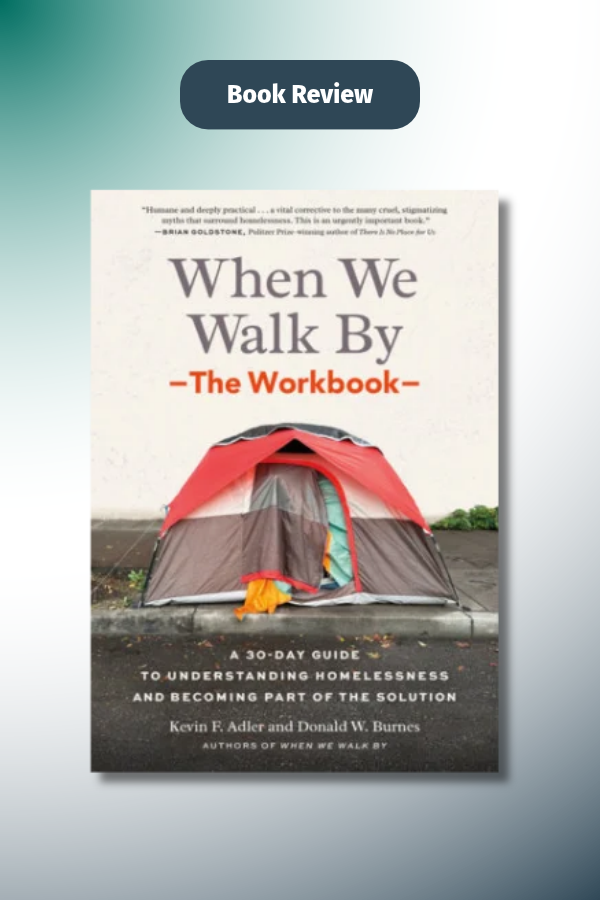
When We Walk By: The Workbook by Kevin Adler
From Understanding Homelessness to Becoming Part of the Solution
What if understanding homelessness was only the beginning? What if the next step was discovering how each of us could become part of the solution?
That is the invitation behind When We Walk By: The Workbook, a new companion to When We Walk By: Forgotten Humanity, Broken Systems, and the Role We Can Each Play in Ending Homelessness, the powerful book by Kevin F. Adler and Donald W. Burnes that we previously featured in HomeAid's Recommended Reading series.
While the original book challenges readers to rethink their assumptions about homelessness and recognize the humanity of those experiencing it, the workbook takes that conversation a step further. Through a 30-day journey of learning, reflection, and action, Adler invites readers to move beyond awareness and consider what they can personally do to make a difference.
It is a timely and practical resource for anyone who has ever asked, "I care about homelessness, but what can I actually do to help?"
Moving from Awareness to Action
One of the central messages of When We Walk By is that homelessness is not simply a housing crisis. It is also a crisis of relationships, belonging, and human connection.
Too often, people experiencing homelessness become invisible to the communities around them. We may pass someone on the sidewalk without making eye contact, assume we understand their circumstances, or feel overwhelmed by the complexity of the issue.
Adler challenges us to respond differently.
The workbook builds on this philosophy by helping readers explore important questions: What causes homelessness? What does it feel like to experience it? Which policies and community responses can make a difference? And perhaps most importantly, how can ordinary people contribute to meaningful change?
Rather than offering a single solution, the workbook encourages readers to examine their own assumptions, deepen their understanding, and identify practical ways to become more engaged.
Its 30-day format makes it especially accessible for individuals, book clubs, classrooms, faith communities, nonprofit organizations, and groups looking to turn meaningful conversations into action.
The Power of Human Connection
Kevin Adler's work is deeply personal.
As the founder and board chair of Miracle Messages, a nonprofit organization dedicated to helping people experiencing homelessness rebuild relationships and social connections, Adler has long emphasized that everyone deserves to be recognized, remembered, and connected to others.
His work challenges a common assumption: that addressing homelessness begins and ends with providing physical shelter.
Housing is essential, but relationships also matter. Family connections, friendships, supportive communities, and a sense of belonging can play a significant role in helping individuals regain stability and rebuild their lives.
The workbook reinforces this important truth. We may not all be able to build housing, change public policy, or provide professional services, but each of us has the capacity to listen, learn, volunteer, build relationships, and treat others with dignity.
Sometimes meaningful change begins with something as simple as seeing another person.
Why This Book Matters to HomeAid
At HomeAid, our mission is to help people experiencing or at risk of homelessness build new lives through construction, community engagement, and education.
When We Walk By: The Workbook connects particularly well with our Education pillar, which seeks to increase understanding of homelessness, challenge misconceptions, and inspire greater community involvement.
Across our national network, HomeAid affiliates bring together homebuilders, trade partners, donors, volunteers, and nonprofit service providers to create housing and supportive environments where individuals and families can begin rebuilding their lives.
But our work has always been about more than the buildings themselves.
Through community engagement activities, volunteer opportunities, educational initiatives, and partnerships with service providers, HomeAid encourages people to become personally involved in addressing homelessness.
That is precisely the kind of engagement this workbook seeks to inspire.
We have also had the privilege of learning directly from Kevin. After sharing the original When We Walk By with our HomeAid team, we welcomed him for a national staff conversation that challenged us to think more deeply about homelessness, human connection, and our individual responsibility to help. Kevin has also shared his perspective through HomeAid's Unsheltered Conversations podcast.
His message is particularly relevant to our network: We cannot address homelessness through construction alone. We must also build understanding, relationships, and communities that recognize the dignity and potential of every individual.
A Resource for Individuals and Communities
One of the workbook's greatest strengths is its potential to bring people together around a shared commitment to learning and service.
For HomeAid affiliates, nonprofit partners, board members, volunteers, and supporters, it offers an opportunity to engage in meaningful conversations about homelessness and consider how those conversations might lead to action.
Imagine a group of colleagues, a community organization, or a family spending 30 days exploring homelessness together, not simply discussing the challenges, but identifying ways to respond in their own community.
That is where education becomes engagement.
And when learning inspires action, communities become stronger.
In Closing
When We Walk By: The Workbook is more than a companion to an important book. It is an invitation to become an active participant in creating change.
Kevin F. Adler reminds us that addressing homelessness is not solely the responsibility of government agencies, nonprofit organizations, or housing providers. It is a shared community responsibility, and everyone has something meaningful to contribute.
At HomeAid, we see the power of that belief every day. Every project, volunteer activity, partnership, and educational initiative begins with people who choose to get involved.
The workbook challenges us to make that same choice in our daily lives.
Because ending homelessness requires more than recognizing the problem. It requires recognizing the people—and believing that each of us can help build a future where everyone has a place to belong.
Related Resources
👁️View original newsletter issue
🎙️Listen to Kevin Adler on the Unsheltered Conversations podcast
Other Reviews