
Democracy in Action - 2026 NAEH National Conference
Earlier this month I had the opportunity to attend the National Alliance to End Homelessness Conference in Washington, D.C. The conference brings together over 1,600 advocates working to end homelessness across the country. The theme and shared values of the week were:
Faith that ending homelessness is possible
Love that refuses to give up on people
Bringing People Home
The initials ‘FLH’, were also conveniently used for ‘Fight Like Hell’ throughout the week as a rallying cry as many service providers and continuums of care (CoC’s) face severe government funding cutbacks.
On Wednesday, I joined hundreds of conference attendees for Capitol Hill Day, where advocates met with more than 300 Congressional offices in the House and Senate. I joined with other Oregonians to visit the offices of our Congressional Representatives and our State Senators where we met with staffers to share stories and concerns about homelessness issues and funding concerns across the state. Storytelling was key. The stories of what is happening in our communities help illustrate what the issues look like in real life. This was a new experience for me. I felt a little out of my comfort zone, but it was fun to do something new!
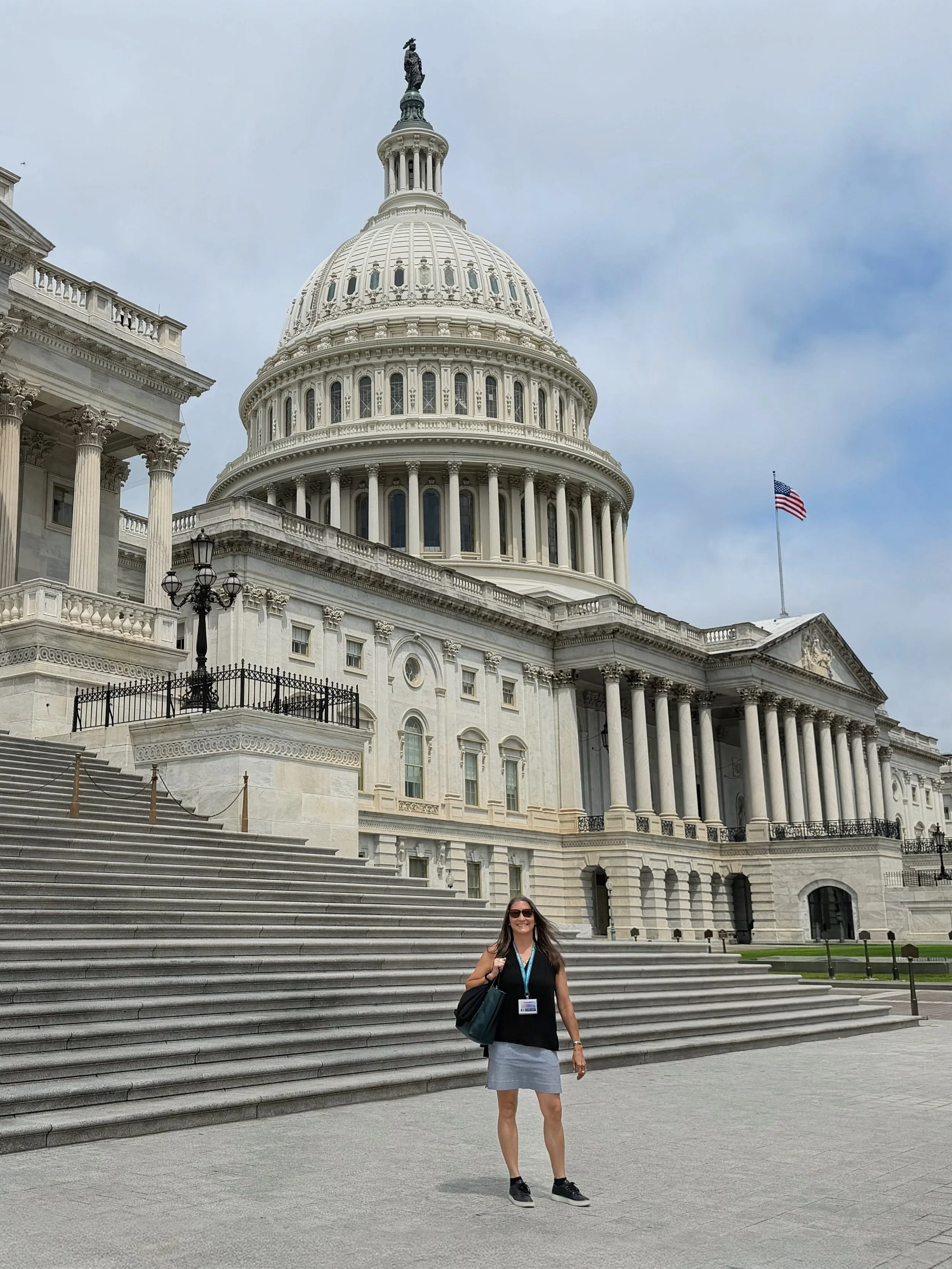
Brenda Ketah in front of Capital Hill
A couple of observations and common themes for the week:
There is continued support for Housing First. By ending people’s homelessness immediately, housing gives them the stability to become self-sufficient and improve their quality of life. But it is part of a whole system that needs to provide resources. Housing First does not mean housing only.
There is a lot of concern about the increasing population of seniors experiencing homelessness. Several providers I spoke with explained that their shelters and day centers are beginning to look like nursing homes- wheelchairs, walkers, people on oxygen, guests with incontinence issues and more. Shelters are providing medical respite, setting up hospice and hiring nursing staff, all with the same or less operational funding than they have had in the past.
Criminalization is not the solution to homelessness. It exacerbates the crisis and does not address the root cause of homelessness.
People want addiction treatment, but they don’t want it tied to their housing. Recovery is a process that often involves setbacks. People may turn down a program because they don’t want to lose their housing in the process.
Overall, it was a great experience for me personally. Since joining the national HomeAid team, I am less connected to the local service providers here in Oregon and the day-to-day issues they face. The NAEH Conference was a good place for me to get up to speed on the ‘language’ of CoC’s, the government funding process and all the acronyms related. It was also helpful to understand the top issues that NAEH is fighting across the country related to HUD funding.
This funding uncertainty for our nonprofit service provider partners, along with rising construction costs, and a building industry in a bit of a downturn can and will affect our HomeAid affiliates as they consider future construction projects. It is important for us to stay connected and educated on issues on the national level to be able to effectively communicate and support our affiliate network.